





Inspiring Day in Brussels- Stakeholder Forum & Final Conference

3 minutes read

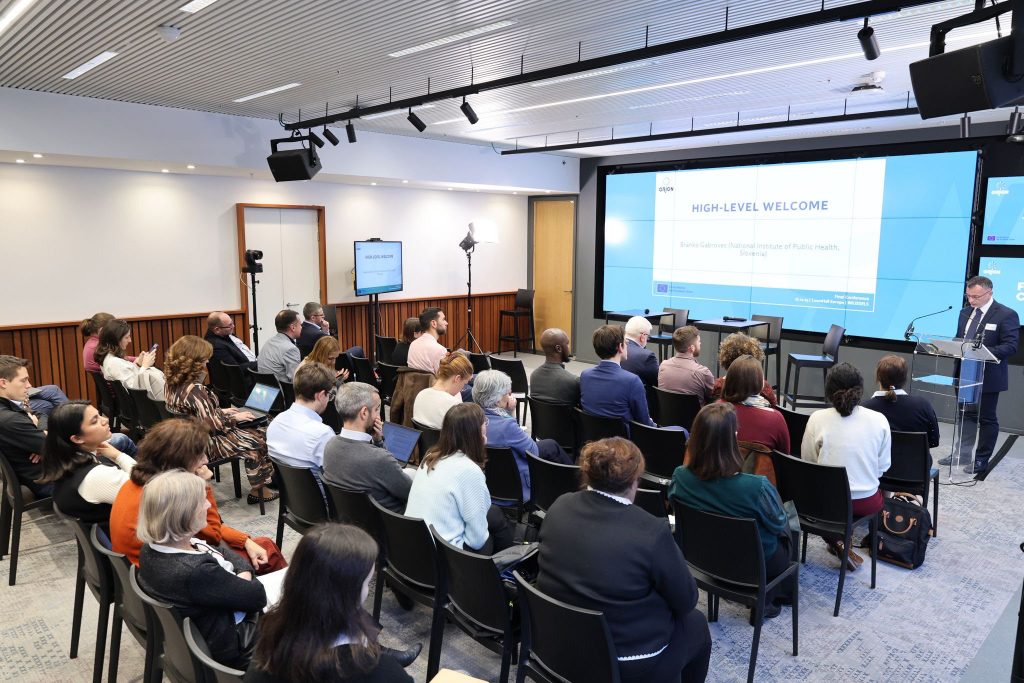
An impactful day unfolded in Brussels on December 16, 2025 with the Stakeholder Forum and the Final Conference of the OriON Joint Action, bringing together policymakers, public health experts, patient organisation representatives, researchers and EU stakeholders to reflect on achievements and advance the conversation on cancer inequalities across Europe.
The day opened with the introduction of the OriON JA concept, highlighting its mission to address cancer prevention and care disparities within the European Union. This session was led by Tit Albreht (National Institute of Public Health, Slovenia), setting the strategic framework for the discussions that followed.
A retrospective on EU-level action on NCCPs traced the journey from EPAAC JA to OriON JA. Marjetka Jelenc and Tina Lipušček (National Institute of Public Health, Slovenia) presented key milestones and lessons learned, underlining progress in governance, methodology, and monitoring frameworks for NCCPs.
The inequality perspective was further explored by Ana Molina Barceló (Fisabio, Spain), who presented exploratory and methodological work on understanding and addressing cancer inequalities within national programmes.
A dedicated presentation brought patient perspectives to the forefront of the discussion on Europe’s Beating Cancer Plan. Linda Abboud (Sciensano, Belgium) presented the OriON JA patient representatives’ workshop, amplifying patient voices within Europe’s Beating Cancer Plan and highlighting contributions from cancer patient NGOs in Belgium, Italy, and Slovenia.
The Stakeholder Forum concluded with a high-level roundtable on tackling inequalities within NCCPs from a Member State perspective. Nikolai Goncharenko (Institut National du Cancer, Luxembourg), Sonja Tomšič (Institute of Oncology, Slovenia), and Roberta de Angelis (Istituto Superiore di Sanità, Italy) shared national experiences and challenges. The discussion was moderated by Tit Albreht.
The Final Conference featured welcome statements from Vesna Marinko (Public Health Directorate, Ministry of Health, Slovenia), Branko Gabrovec (Director General, NIJZ), Domenico Fiorenza Glanzmann (DG SANTE), and Antonella Canalis (HaDEA), reaffirming strong institutional commitment to cancer control in Europe.
Key technical achievements were presented throughout the conference. Linda Abboud introduced the Europe’s Beating Cancer Plan Monitoring and Evaluation Framework as a core output of Work Package 4. Marjetka Jelenc presented the state of play of NCCPs in Europe alongside policy recommendations, which were discussed by André Ilbawi (WHO), Sabine Vuik (OECD), and Yannick Romero (UICC) in a dedicated stakeholder panel moderated by Tit Albreht and Marjetka Jelenc.
The second afternoon panel focused on inequalities within NCCPs, introduced by Ana Molina Barceló. The discussion brought together perspectives from Cristiana Fonseca (Liga Portuguesa Contra o Cancro), Domenico Fiorenza Glanzmann, and Isabel Mosquera Metcalfe (IARC/WHO), and was moderated by Ana Molina Barceló and Linda Abboud.
The day concluded with Béatrice Durvy (European Observatory on Health Systems and Policies) presenting the OBS-PACE project, a complementary initiative offering a new approach to learning from progress in cancer prevention, treatment, and care across Europe.

Recent News


Leave a Comment